Your subscriptions
Use the agents you already pay for
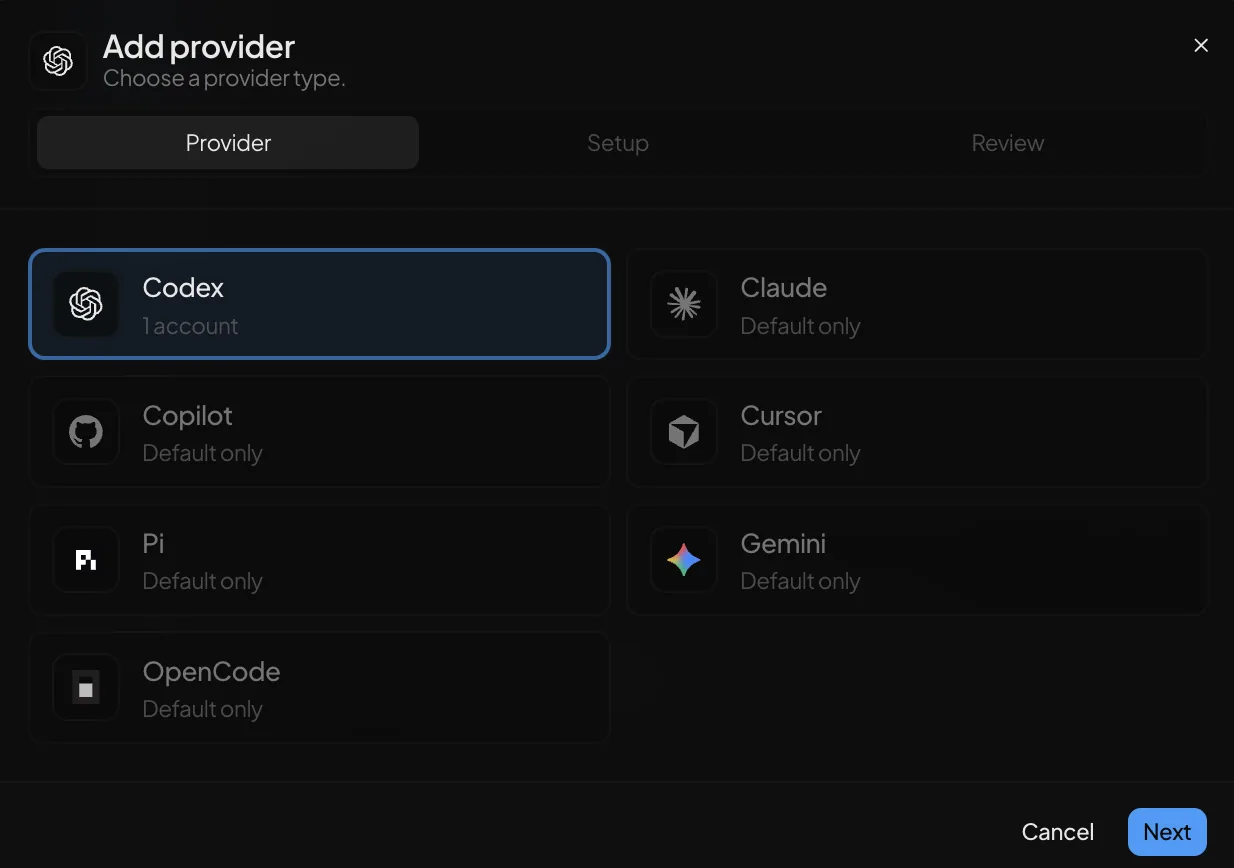
Connect Codex, Claude, Gemini, Cursor, Pi, GitHub Copilot, and OpenCode. Add personal, work, or extra accounts for the same provider, then switch when one account hits a limit.
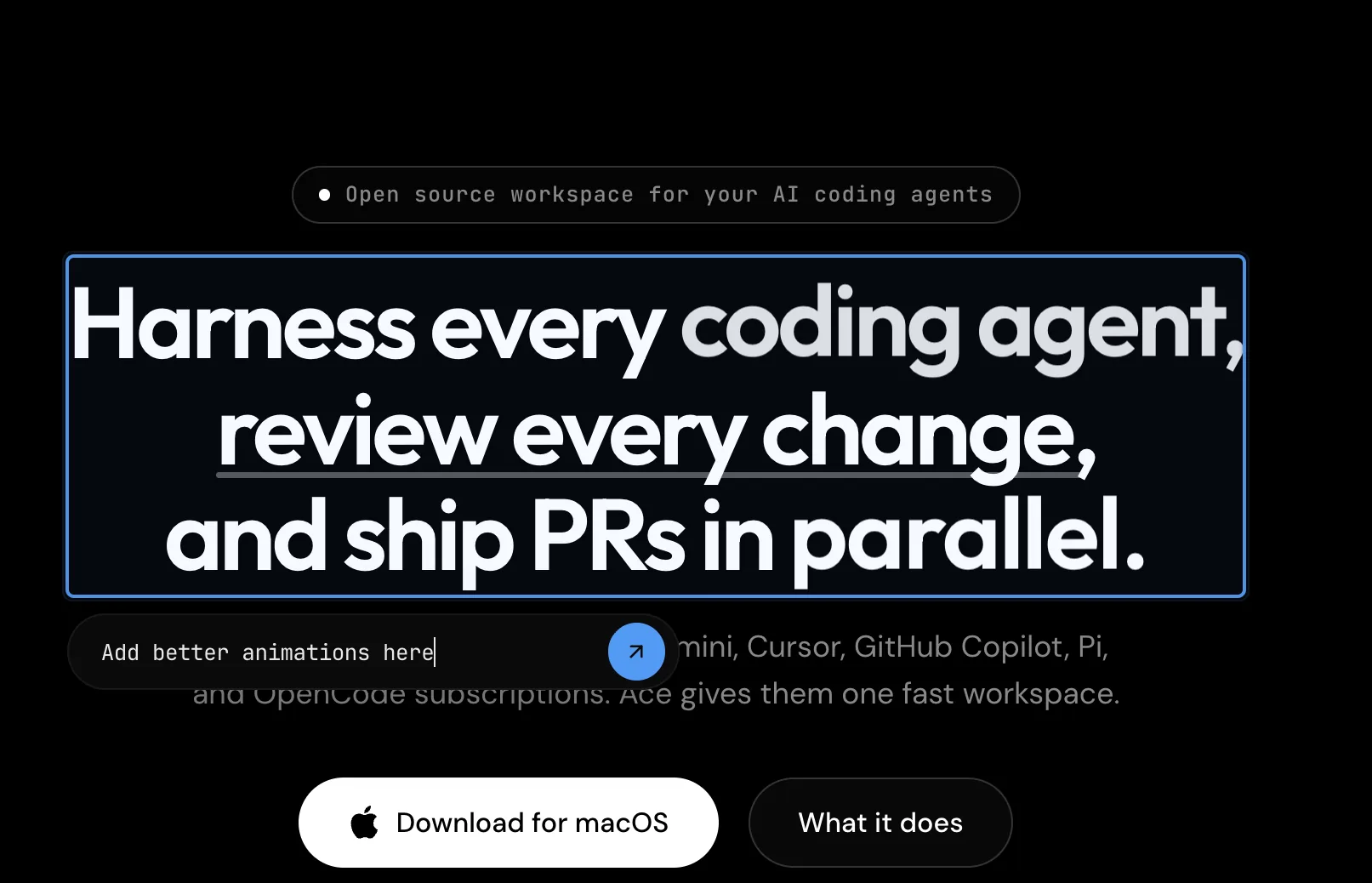
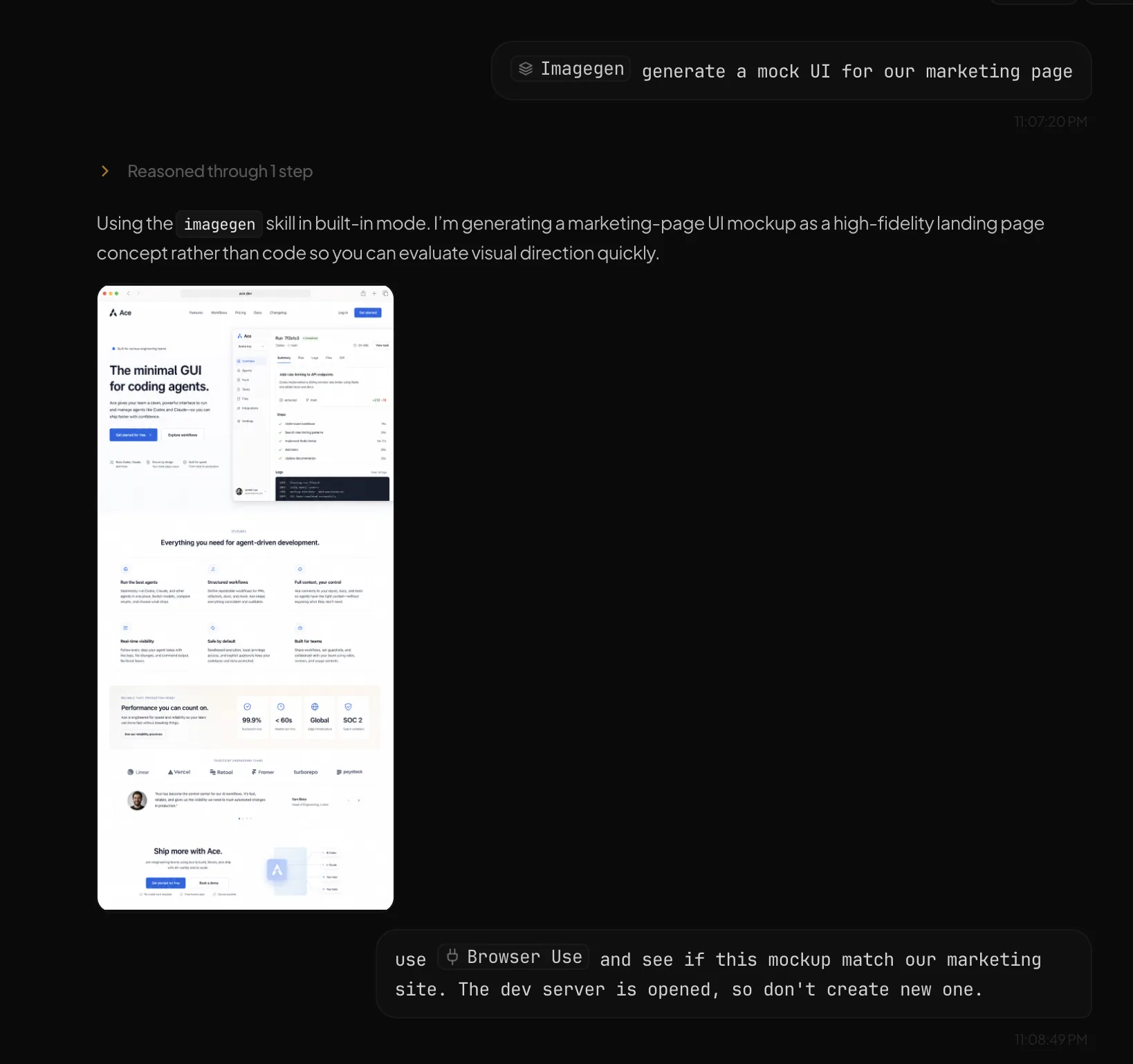
Open source workspace for your AI coding agents
Bring your own Codex, Claude, Gemini, Cursor, GitHub Copilot, Pi, and OpenCode subscriptions. Ace gives them one fast workspace.
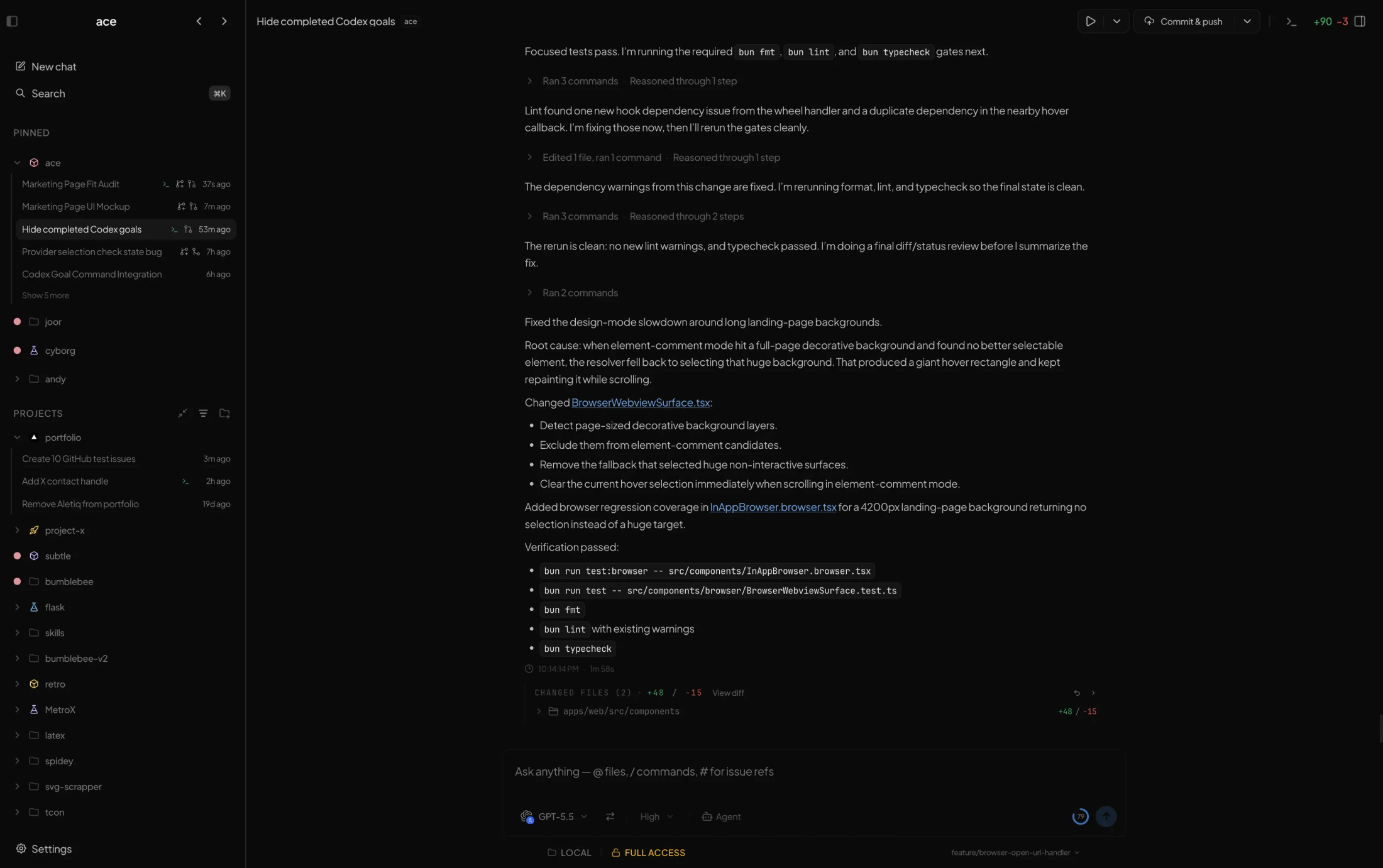
Seven providers, split chats, browser review, editor comments, worktrees, terminal, and diffs.
Product
The browser, editor, terminal, diffs, accounts, and PRs stay together, so you spend less time wiring tools around the chat.
Connect Codex, Claude, Gemini, Cursor, Pi, GitHub Copilot, and OpenCode. Add personal, work, or extra accounts for the same provider, then switch when one account hits a limit.
Click the UI in the built-in browser and leave a note for the agent. Highlight code in the editor and send that comment into the chat. Less screenshotting, less explaining, fewer repeat instructions.
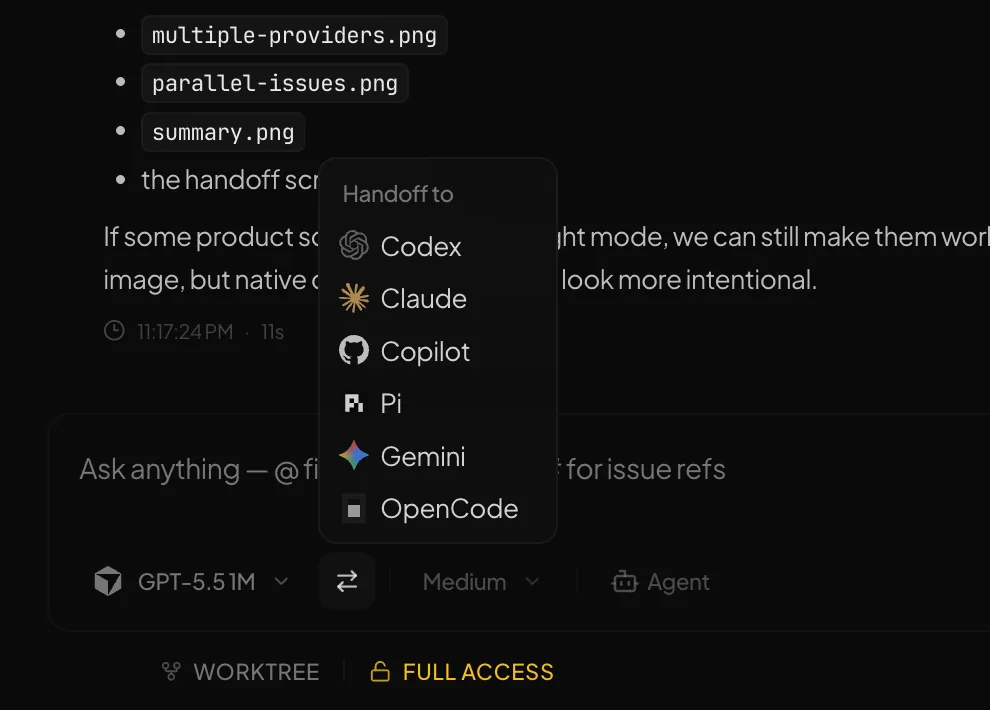
If Codex is rate-limited, or Claude/Gemini is better for the next step, hand the thread over without starting again. Bring it back later when you want to continue with the original agent.
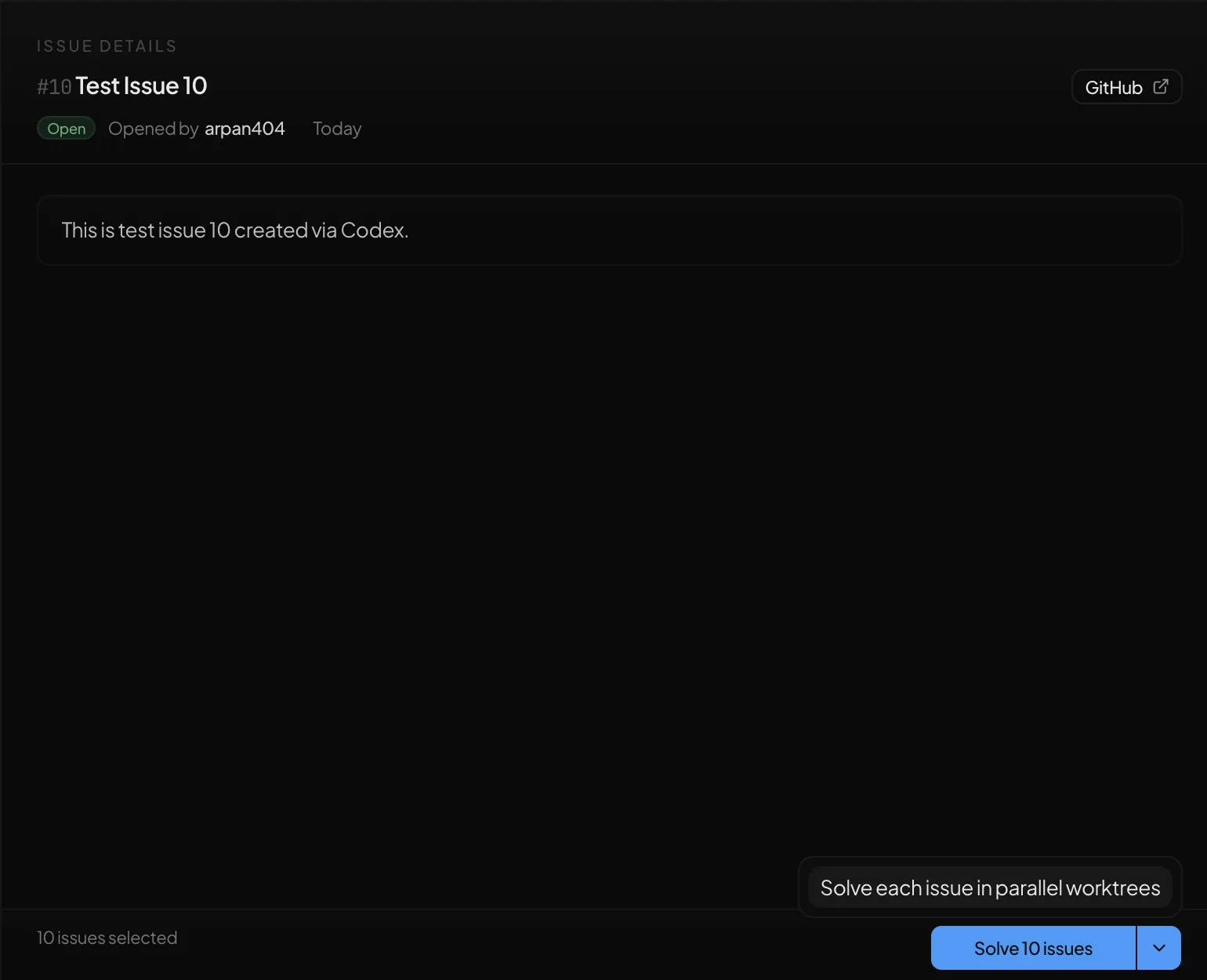
Open issues or PRs, send each one to its own worktree, and let agents work in parallel. Ace stays responsive while you review diffs, jump between threads, and move fixes forward.
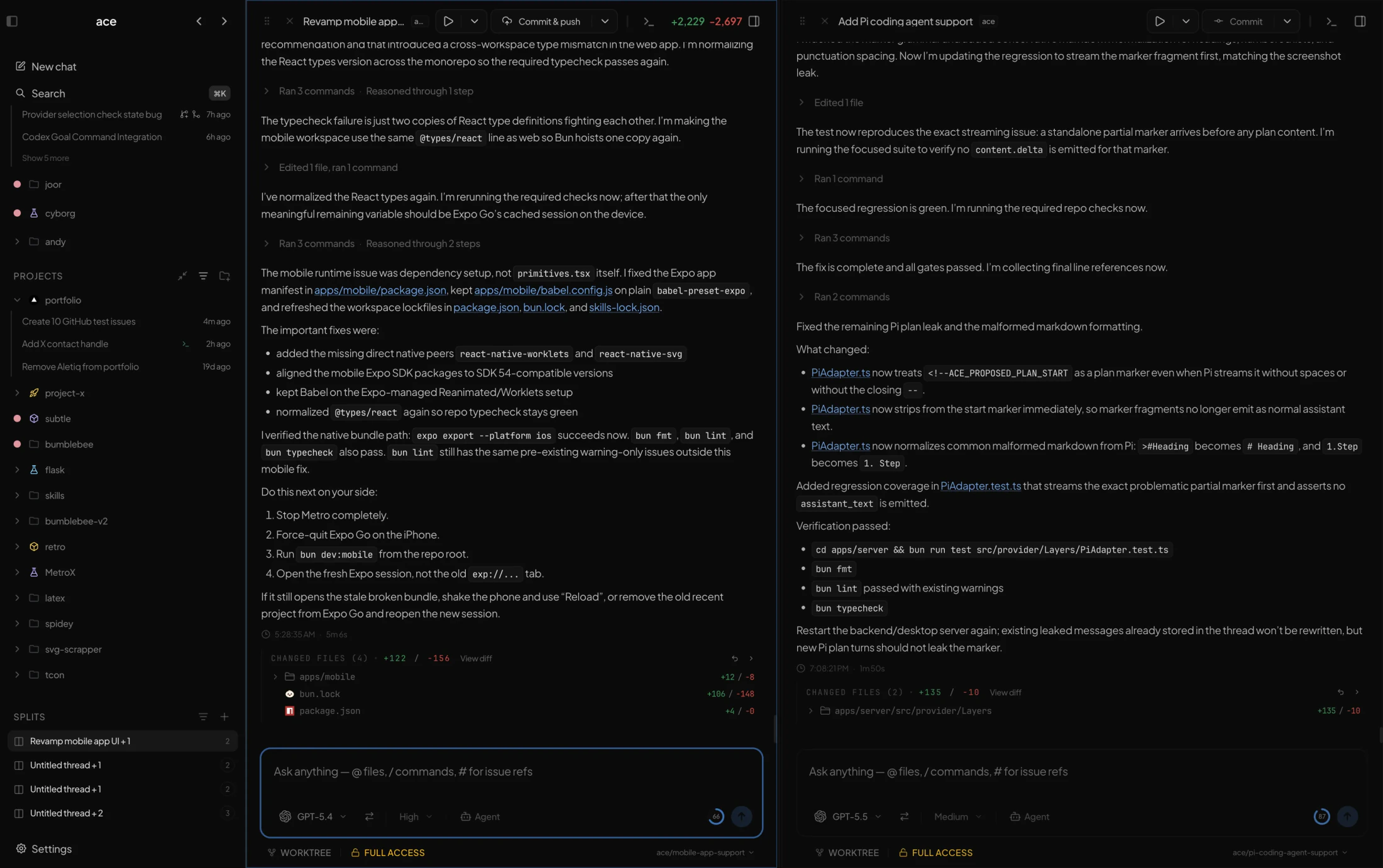
Open multiple chat windows and place them side by side. Follow different agents, compare approaches, or keep a long-running task visible while you handle something smaller.
Ace supports Codex plugins and skills, including browser automation and image generation. Agents can control the built-in browser. Similar tools for other providers are coming later.
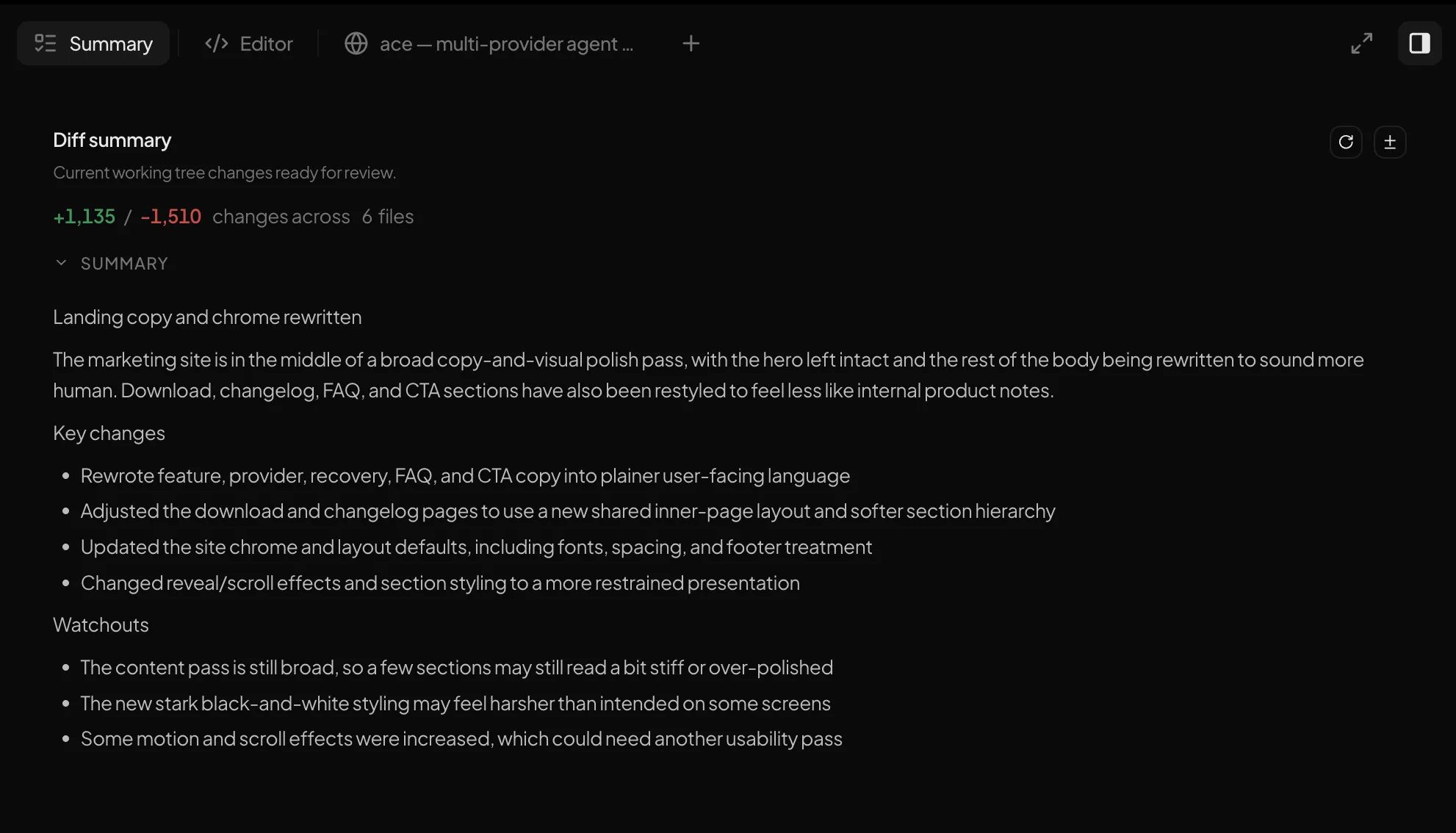
Review diffs, read AI-generated summaries, use the terminal, and move with keyboard shortcuts. The everyday pieces are in the same place as the agent conversation.
Switch agents when needed
Keep the same thread when one provider is rate-limited or another agent is better for the next step.
Recovery
If the network drops or a run goes sideways, reconnect and restore without rebuilding the whole thread from memory.
Security & privacy
Remote viewing is end-to-end encrypted between your machine and the viewer. Use our relay or self-host your own. A mobile app is on the way.
We do not track your prompts, code, or files for ads or resale. We only use anonymous usage stats, like provider usage, to decide what to improve next.
FAQ
Codex, Claude, Gemini, Cursor, Pi Coding Agent, GitHub Copilot, and OpenCode. You can sign into more than one account for each provider.
No. Bring the accounts, API keys, and CLIs you already use. Ace is the desktop workspace around them.
We do not track your code, prompts, or files for ads or resale. We may collect anonymous usage stats, like which providers are used most, so we know what to improve first.
Remote viewing is end-to-end encrypted between the host and the viewer. Use the managed relay or self-host it.
Not yet. A mobile app is in active development.
Today, Codex has the deepest tool support: plugins, skills, browser-use, image generation, and browser control. We plan to bring more of that to other providers over time.
Get started
Install the app, connect your provider accounts, and keep chat, review, terminal, diffs, and PR work in one place.